Materials

The room is the material.

Why I'll steer you toward an iron, copper or stone tub, why I love the people who make things by hand, and how one beautiful tile can carry a whole room.

The bath

Why not the standard tub?

Most builder-grade tubs are acrylic or fiberglass, a sheet of plastic heated and pulled over a mold. They are light, inexpensive and easy to put in, and they have their place. But they are made to disappear, and they wear out sooner. Fiberglass often lasts around ten years, and acrylic around fifteen to twenty. A tub made of iron, copper or stone is something you only buy once.

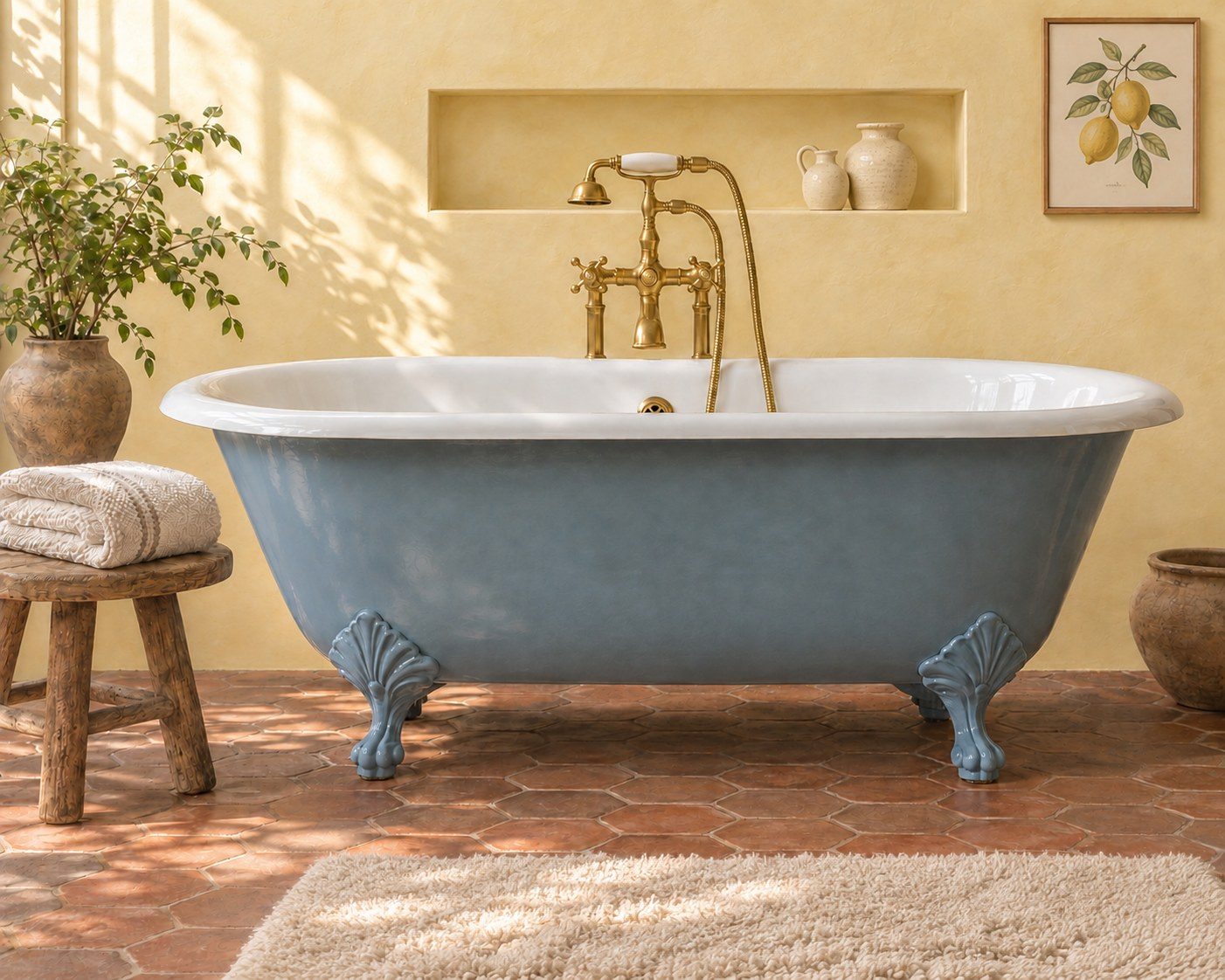
Cast iron bathtub, concept rendering

Cast iron

Iron poured into a mold and fired with porcelain enamel. Its weight is its gift: once the warm water heats the iron, the tub holds that warmth for a long, steady soak, and the hard enamel shrugs off decades of use. Many outlast the bathroom they were put in.

Plan for it: a cast iron tub can weigh 300 to 500 pounds empty, so we check the floor first.
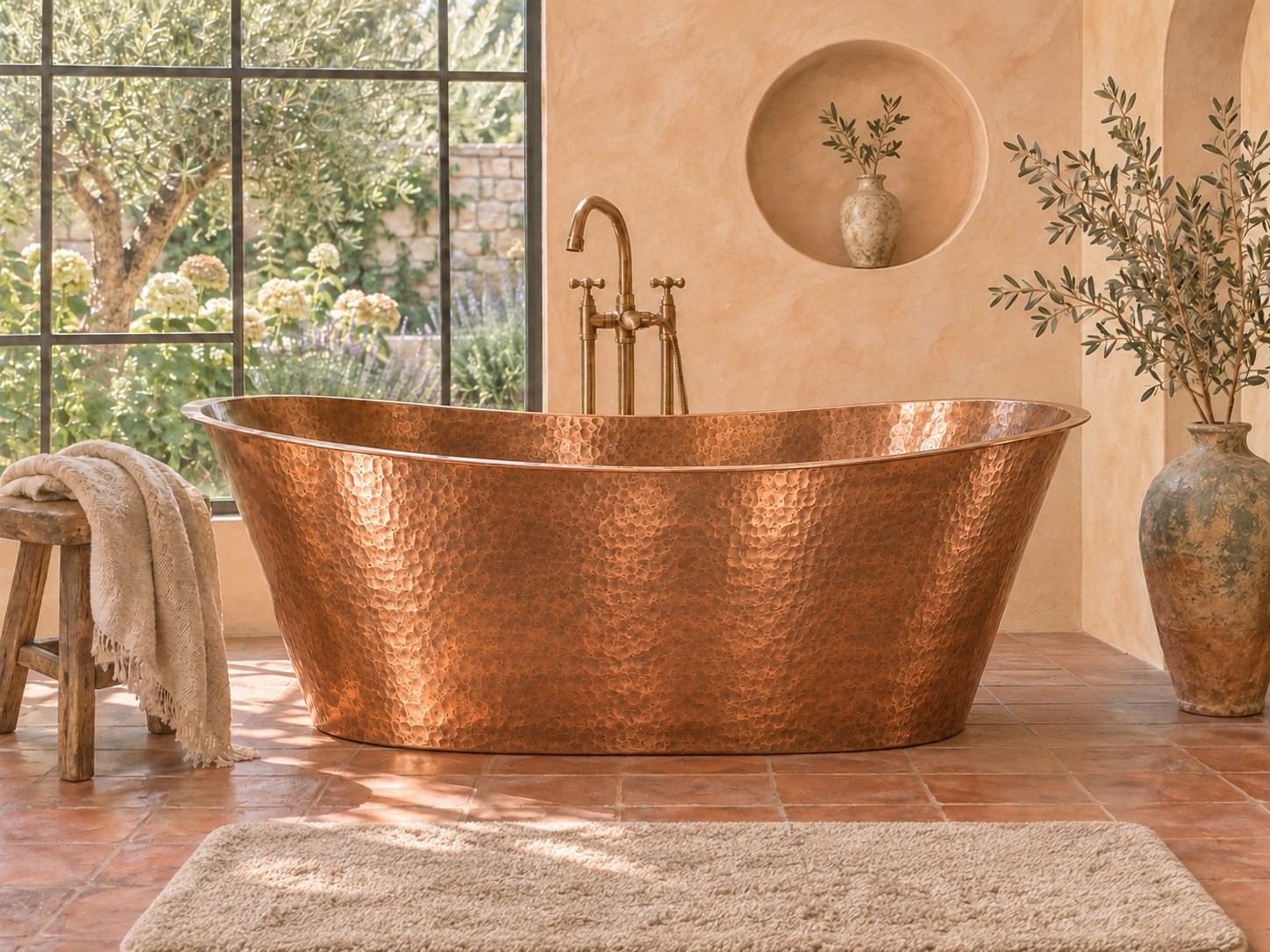
Hammered copper bathtub, concept rendering

Hammered copper

Shaped by hand by coppersmiths, so no two are alike. Copper warms up quickly with the water, it won't rust the way iron does, and it slowly grows a patina that deepens every year. It is the tub that becomes the art in the room.

Plan for it: decide early whether you want a living finish that changes, or a sealed one that stays put.

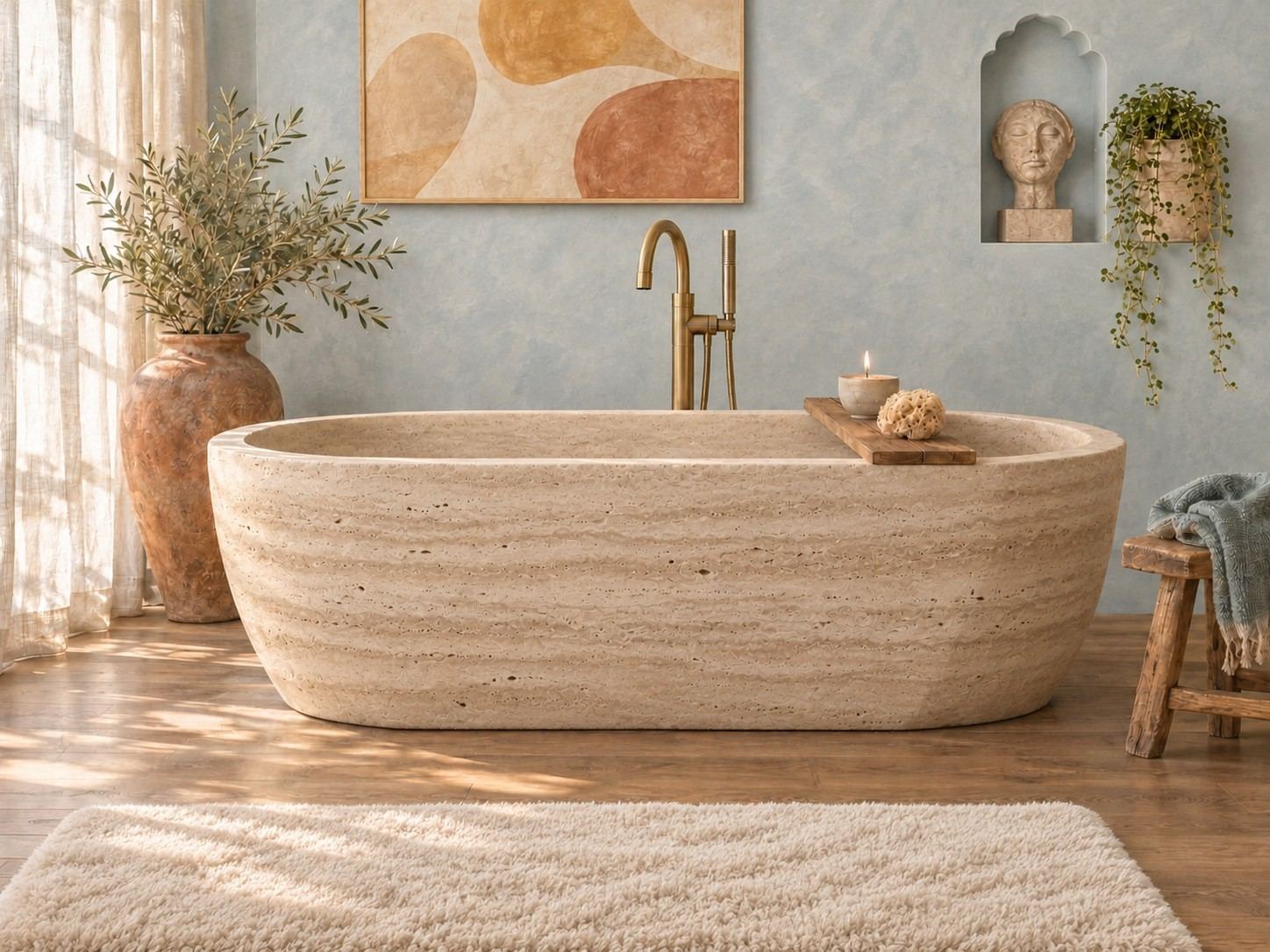
Carved stone bathtub, concept rendering

Carved stone

Cut from a single block of travertine, marble or basalt by a stone carver. It is sculpture you bathe in: quiet, solid and completely one of a kind, with the veining and fossils of the stone itself.

Plan for it: solid stone is very heavy and needs a structural plan. Cast stone gives a similar look at a lighter weight.

Still the right call sometimes: an upstairs kids' bath, a rental, or a tight budget. If we use acrylic, we put the money into the tile and fixtures around it.

Artisans

Made by hands, and you can feel it.

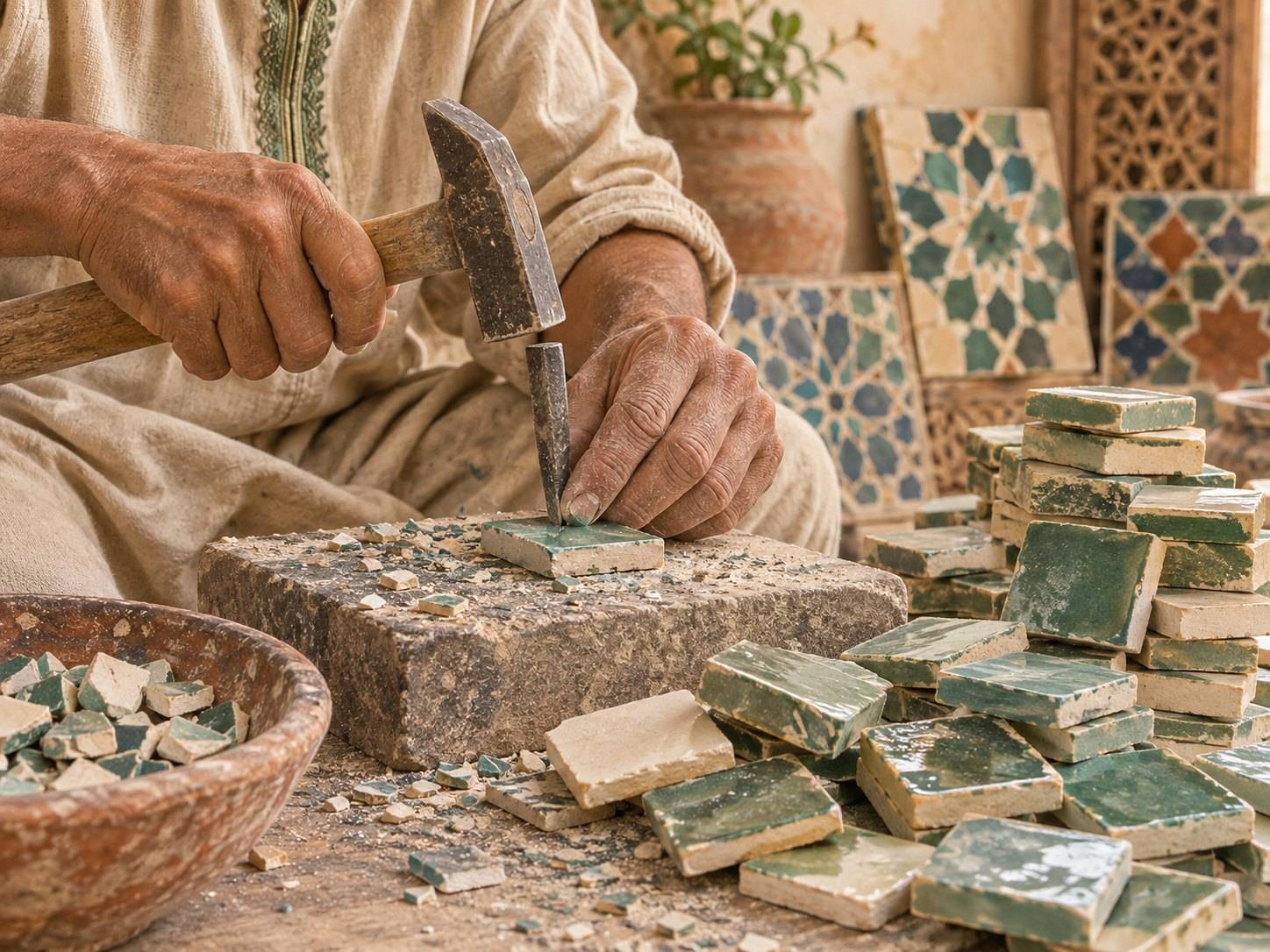
A machine-made "handmade look" tile is perfectly flat and perfectly even. Real zellige is not. Each tile is shaped, glazed and fired by someone, then chipped to size with a small hammer. Put a few hundred of them on a wall and the light moves across it all day.

That is what I mean by soul in a room. Not more things, but a few things made with care, by people who have practiced their craft for years. I want my clients to know who made their tile, their tub, their table.

An artisan shaping green zellige tiles by hand with a hammer and chisel, concept rendering
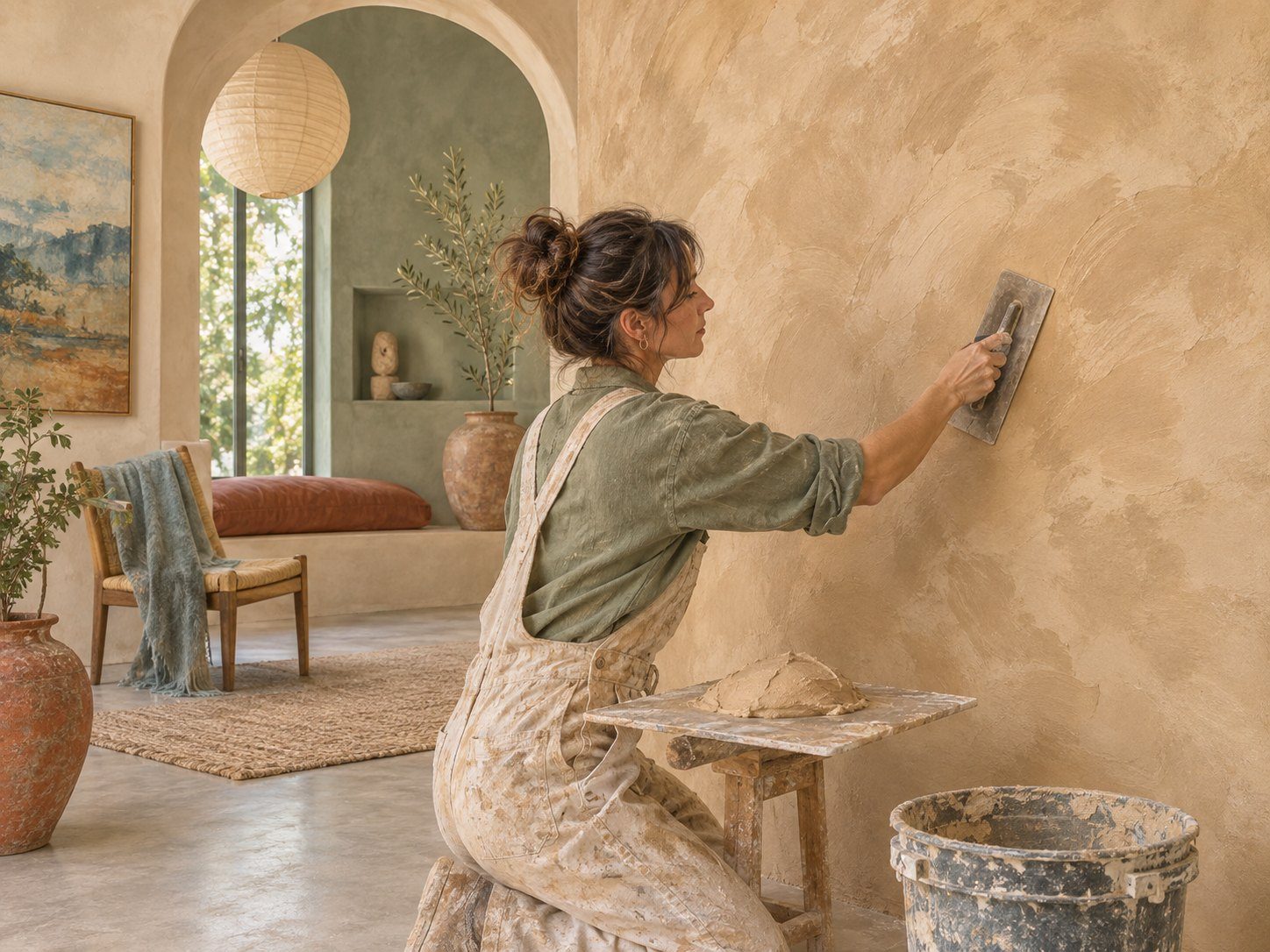
A plasterer troweling warm sand lime plaster onto a wall, concept rendering

Materials I reach for.

  • ZelligeGlazed terracotta tile, cut by hand in Morocco. Every piece is a little different in color, thickness and edge, so a wall of it catches light like water.
  • Talavera and Provençal tileHand-painted tile from Puebla, Mexico, and glazed tile from the south of France. A little wobble in the line is the point.
  • Lime plasterTroweled on in thin layers by a plasterer. Soft, cloudy and alive. Paint sits on a wall; plaster becomes the wall.
  • Unlacquered brassFaucets and pulls that darken where your hand touches them, and brighten again with a little polish.
  • Reclaimed woodA beam that already has a hundred years of life in it. Ours became the mantel.
  • Hand-blocked paperWallpaper printed one block at a time, so the pattern breathes instead of marching.
Make or break

One splurge can carry a room.

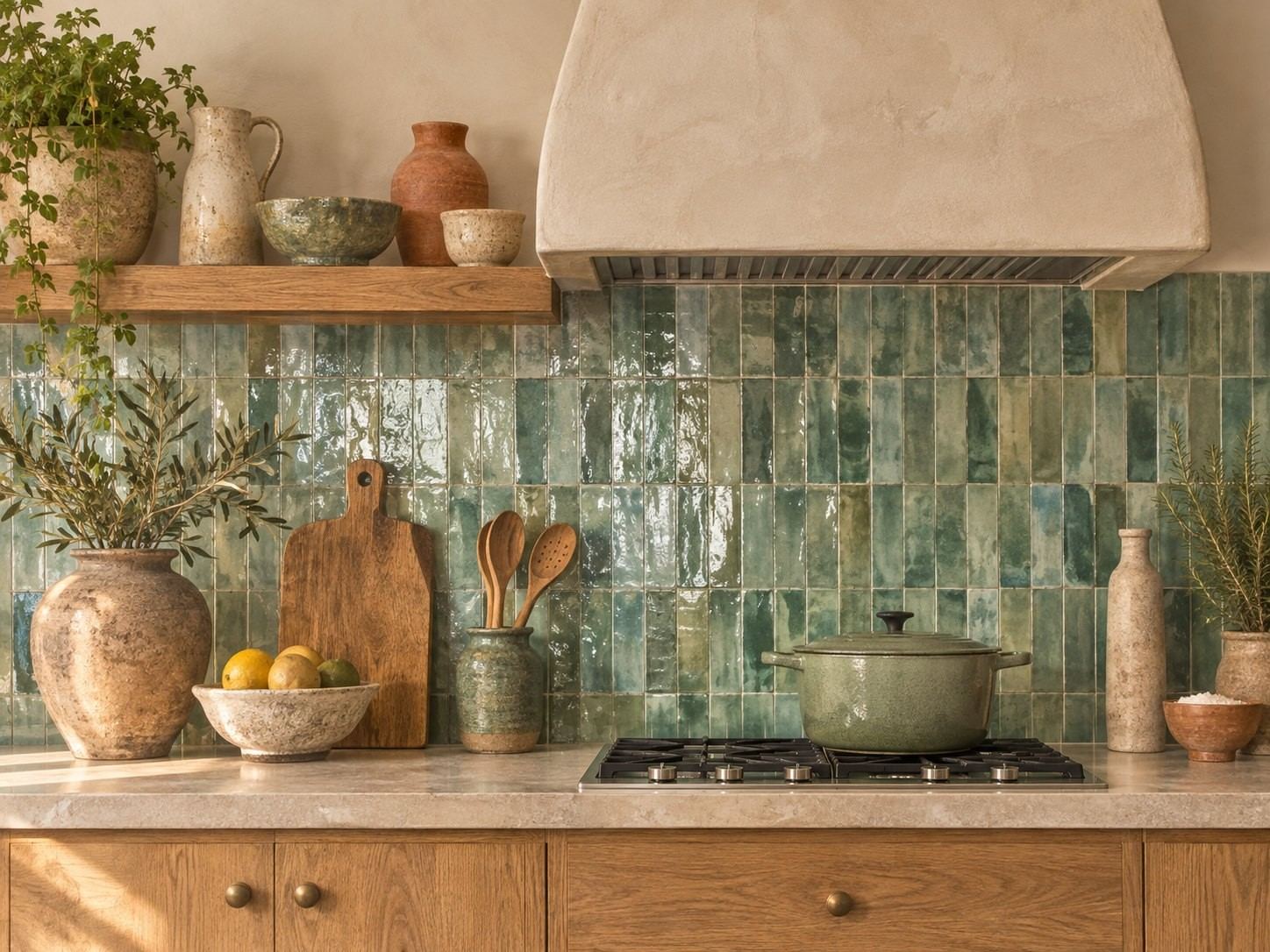
I would rather you spend on one beautiful, handmade tile in the right place than on an average tile everywhere. Tile is priced by the square foot, and the places that matter most are small: a powder room floor, the wall behind the range, a shower niche, a fireplace surround. Those can be just 20 to 40 square feet. Even at several times the price, the total can be surprisingly manageable, and it is the spot everyone sees.

It works the other way too. An expensive, busy tile on every surface fights the architecture and tires the eye. A cheap tile in the one place everyone looks makes the whole room feel builder-grade. The skill is in choosing where.

A backsplash of handmade sea-glass green zellige behind a plaster range hood, concept rendering
At home

Our hearth taught me this.

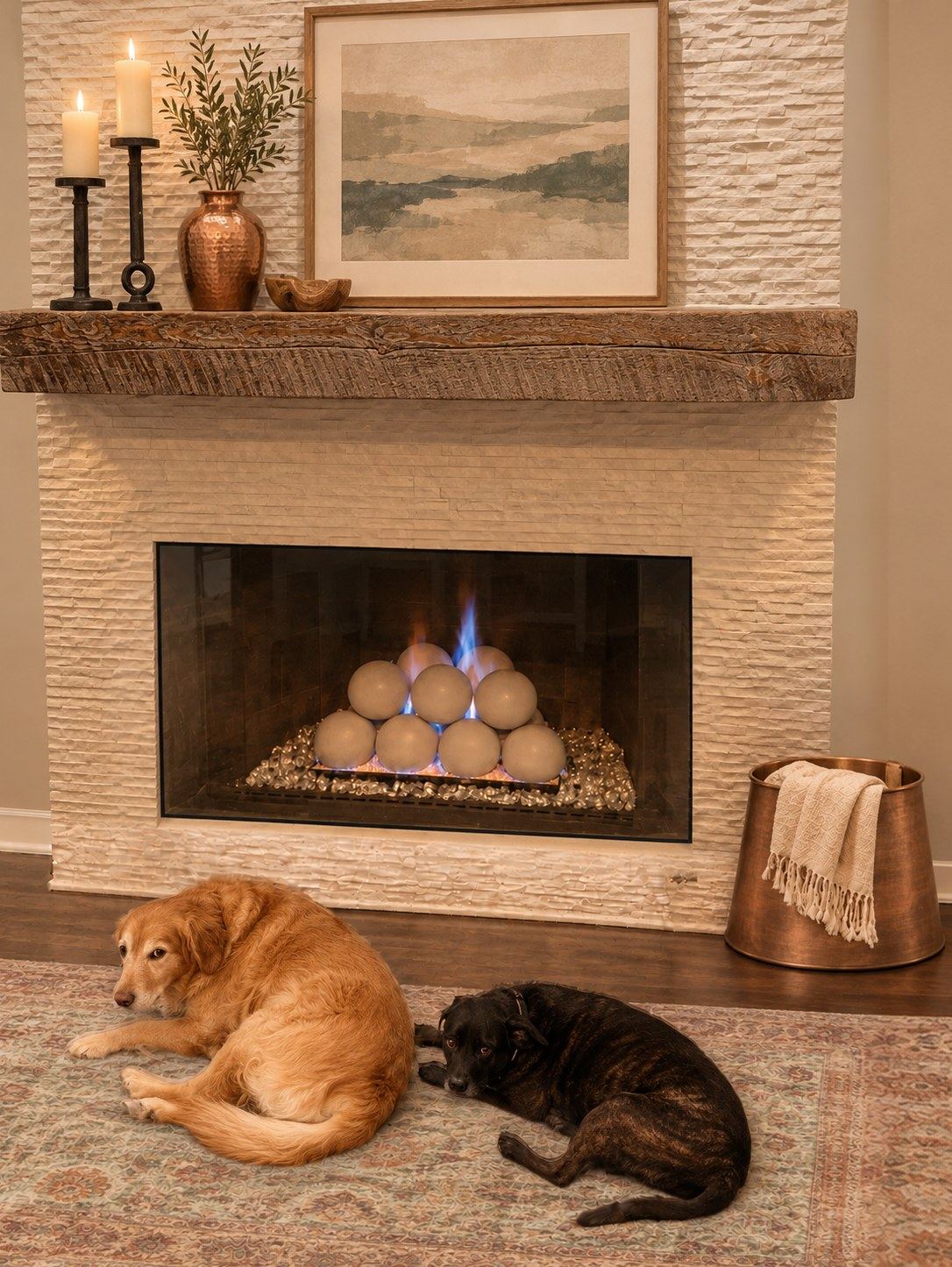
Brian and I built our fireplace ourselves: raked white stone set by hand, and a reclaimed beam for the mantel. It is the most expensive material in the room per square foot, and the reason the room works. Everything else could stay simple because the hearth does the talking. The dogs agree.

Our fireplace with raked white stone, a reclaimed beam mantel and our dogs on a vintage sage and rust rug
How I choose

A few rules I live by.

Not sure where your splurge belongs? That is exactly what a Nesting Session is for.

  • Spend where the hand touches and the eye lands.The tub, the faucet, the door pulls, the wall behind the range.
  • Let one material lead.One showpiece per room. Everything around it stays quiet so it can sing.
  • Choose things that age well.Patina, not peeling. Stone, metal, wood and clay get better with time.
  • Save on the field, splurge on the feature.A simple tile on most walls makes the special one look even better.
  • Respect the install.Heavy tubs need a plan and handmade tile needs an installer who loves it. The craftsman matters as much as the material.
  • Buy from the maker when you can.You get the story with the piece, and the artisan keeps the craft alive.

Book a Nesting Session

Tub lifespans and weights are general industry guidance from Archic (citing This Old House), Ferguson and Vatero; every product is different.